( 001 )
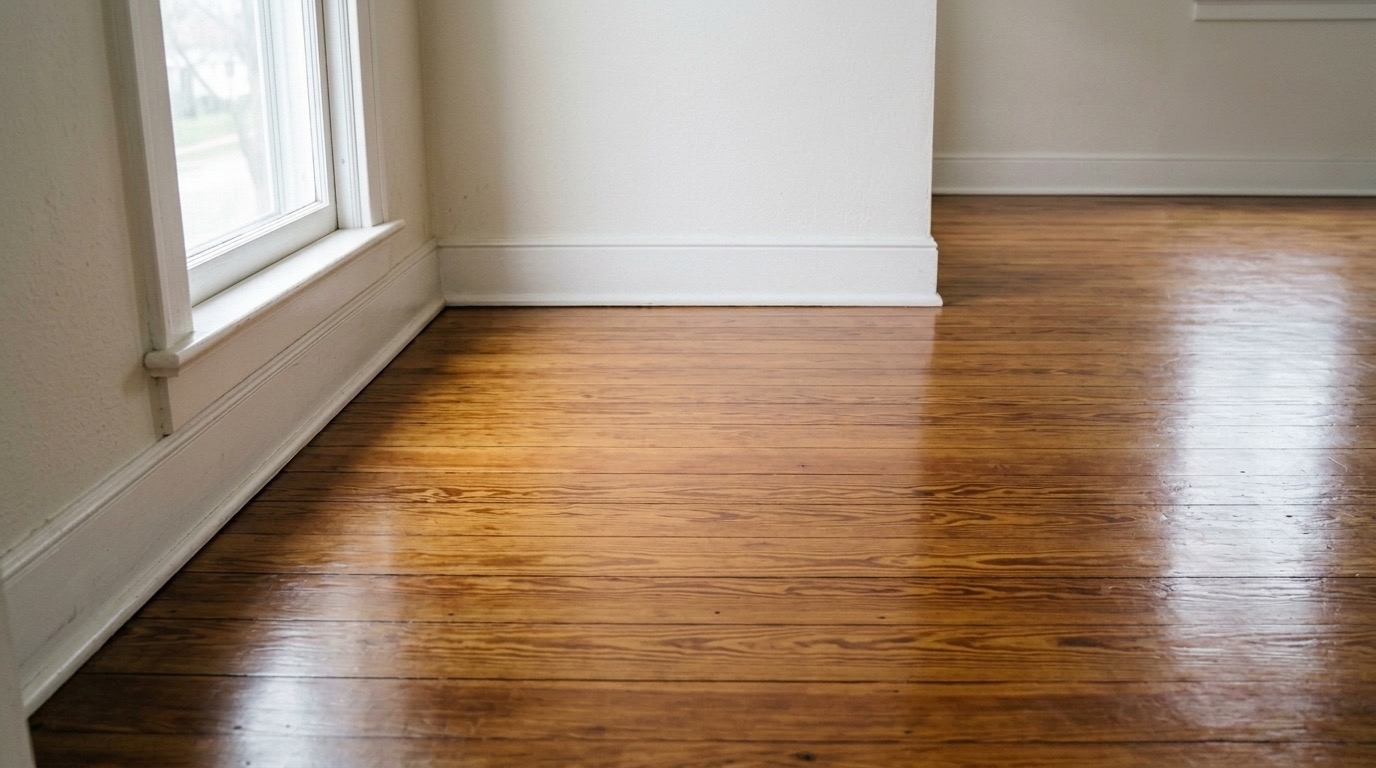
Full sand & refinish
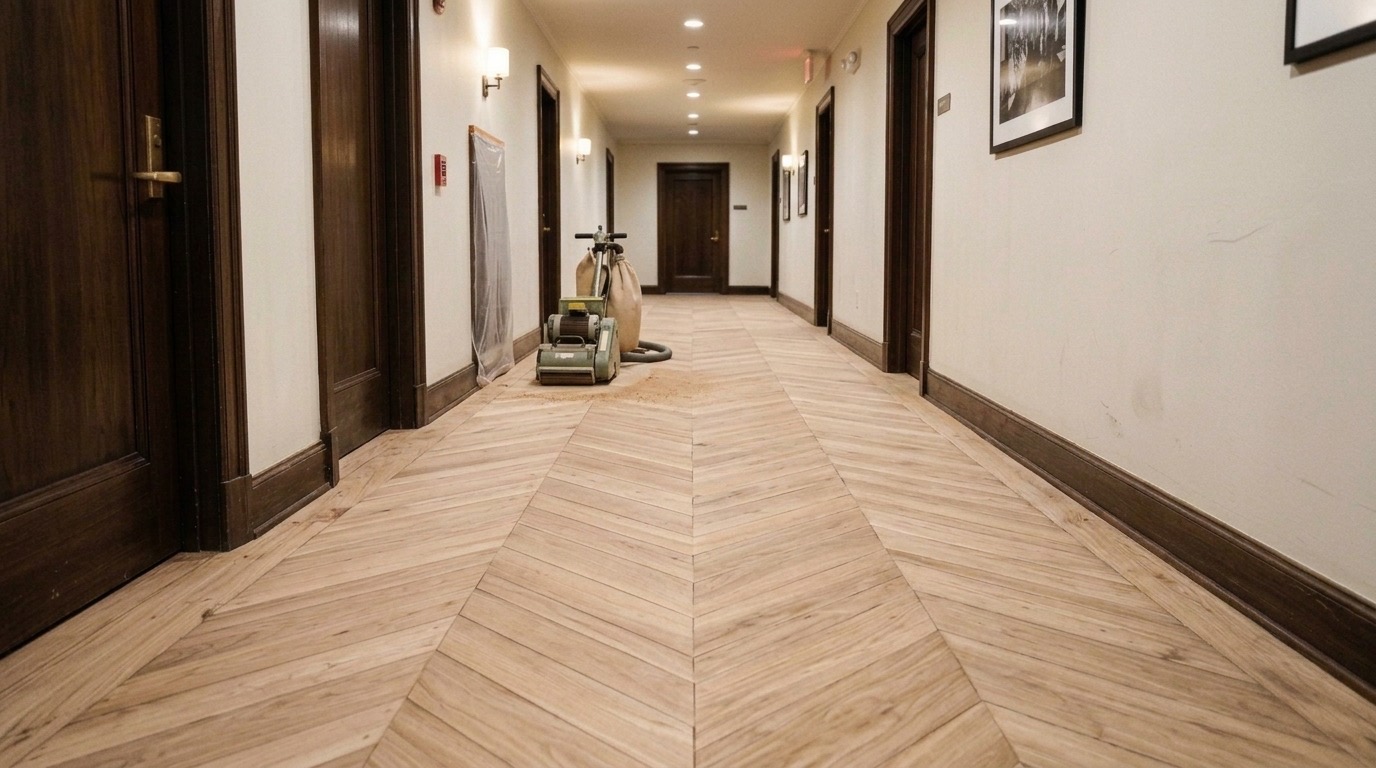
Taken back to bare wood, restained and finished. Edges cut in by hand so the colour runs clean to the baseboard.
Hardwood restoration · Toronto & the GTA
01 — Recent work
Six jobs across the GTA — recoats, full refinishes, stairs, parquet, and boards other people had written off. Scroll across.
( 001 )
Taken back to bare wood, restained and finished. Edges cut in by hand so the colour runs clean to the baseboard.
( 002 )
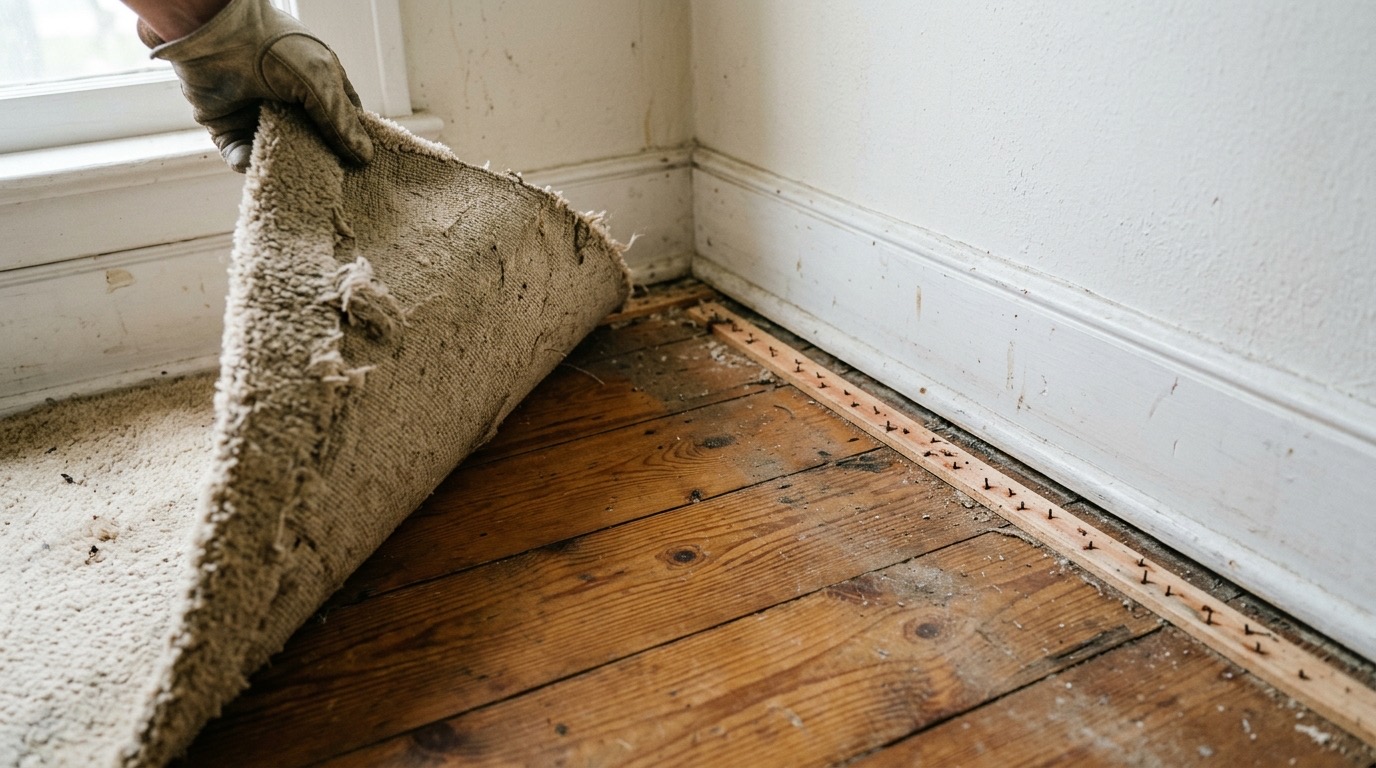
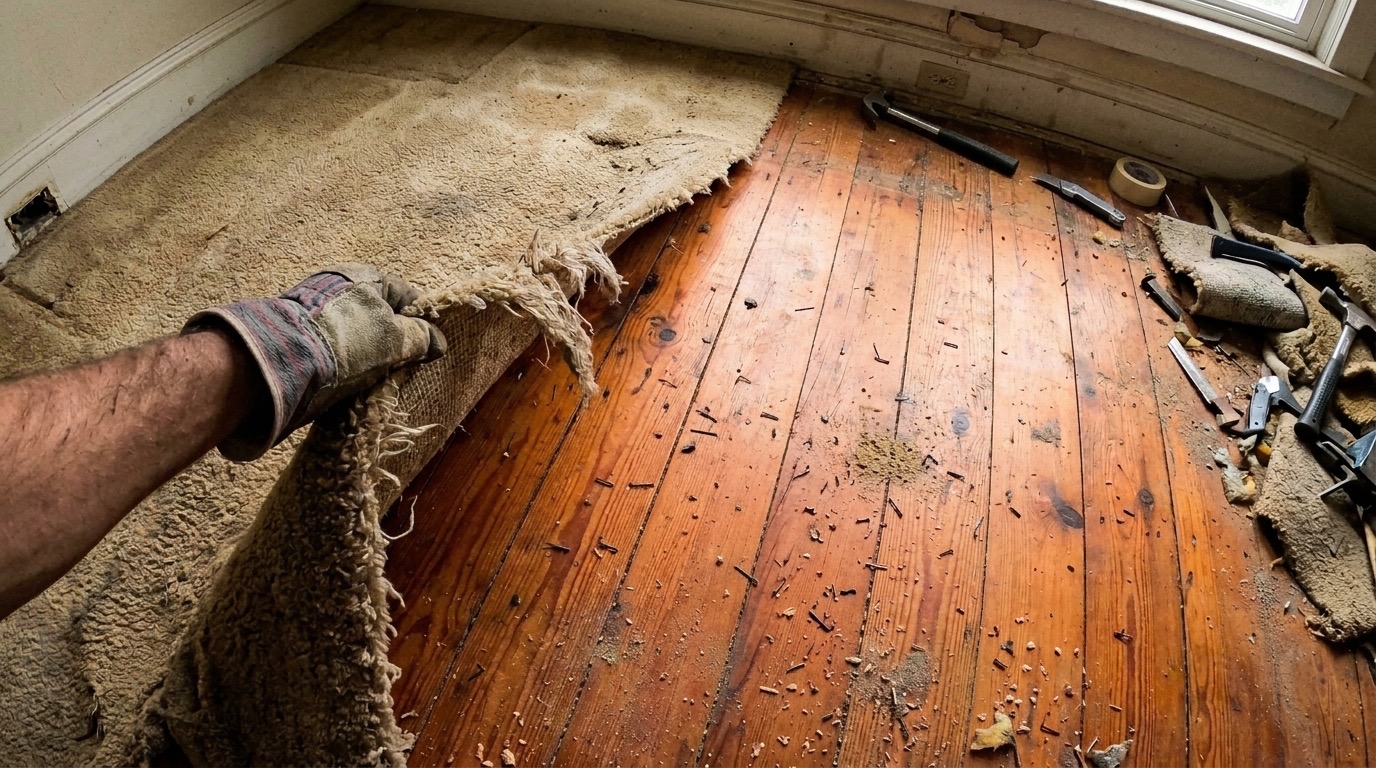
Carpet, underlay and tack strip out. Staple holes and tack marks sand away — the floor underneath was never ruined.
( 003 )
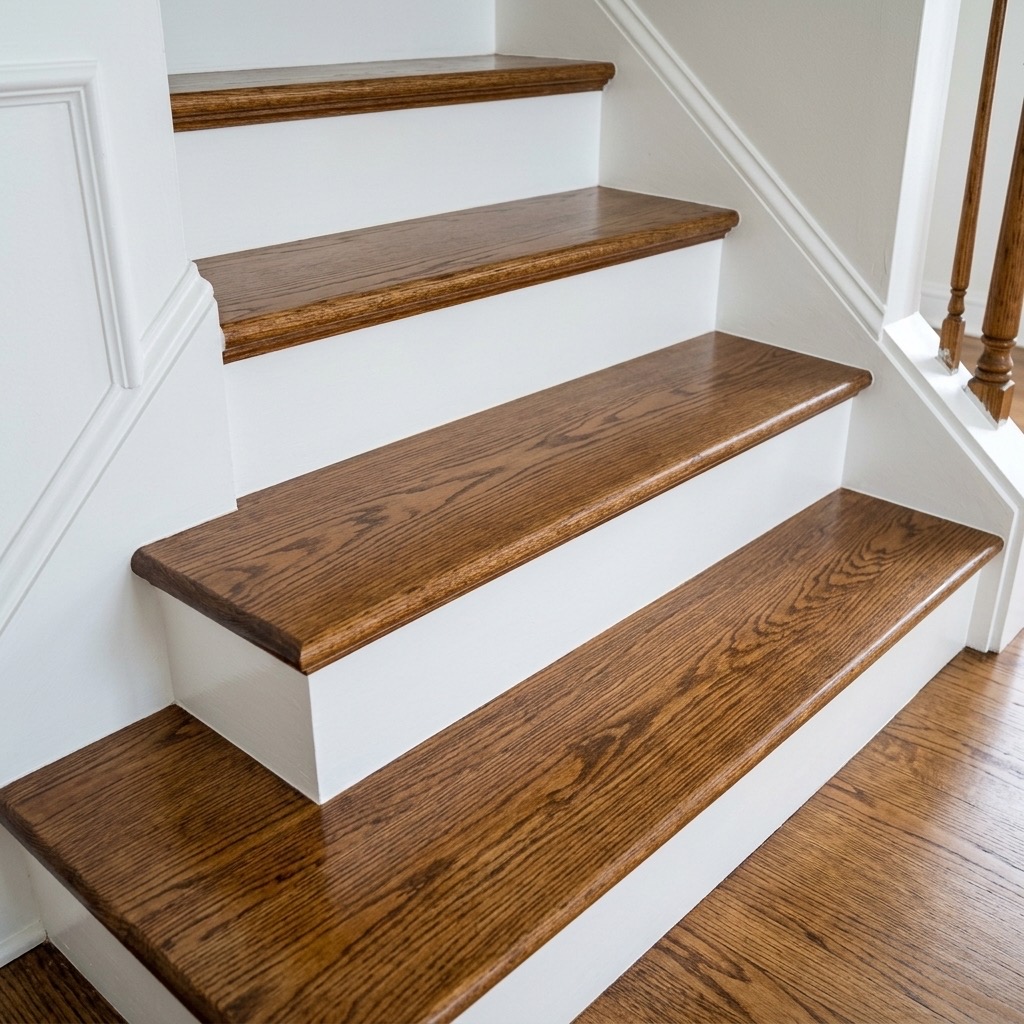
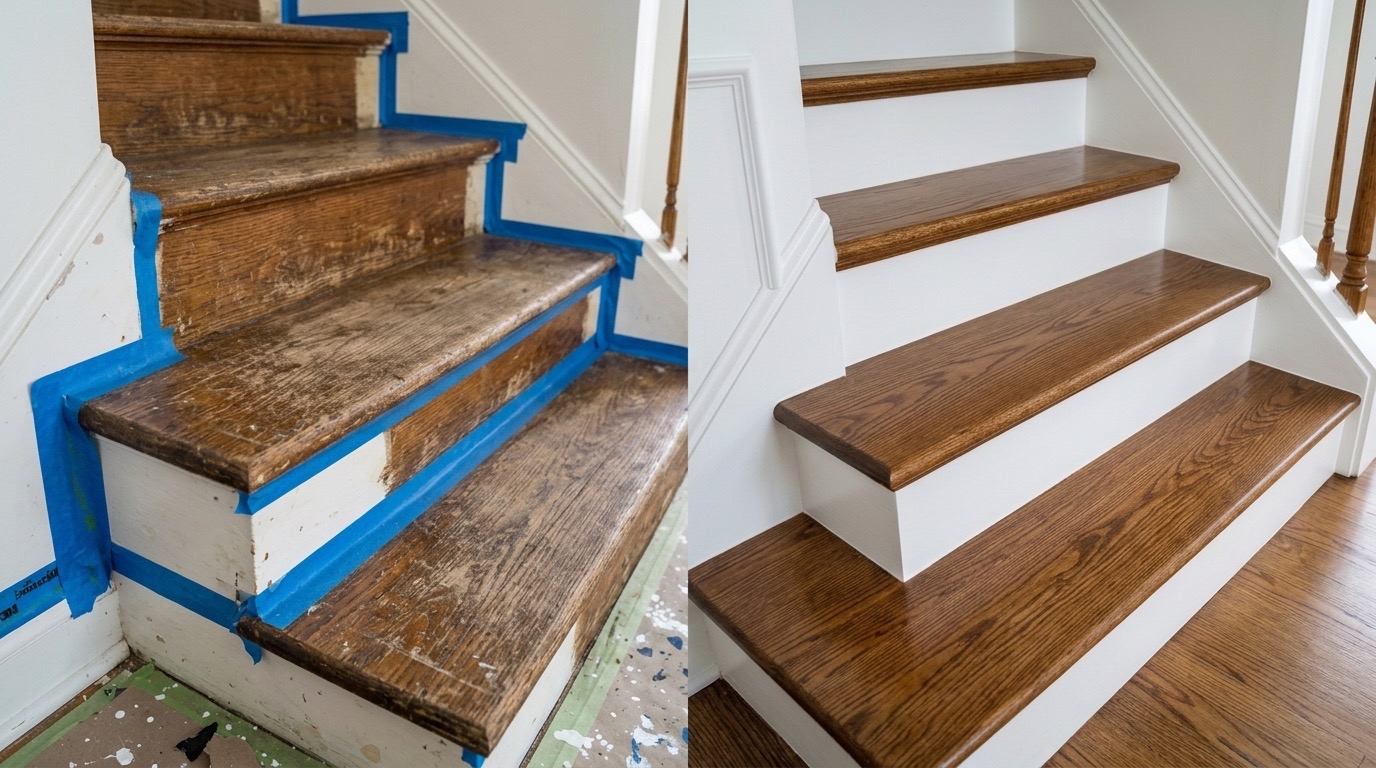
Treads sanded by hand and stained to match the floor, risers painted clean. Nosings kept in profile.
( 004 )
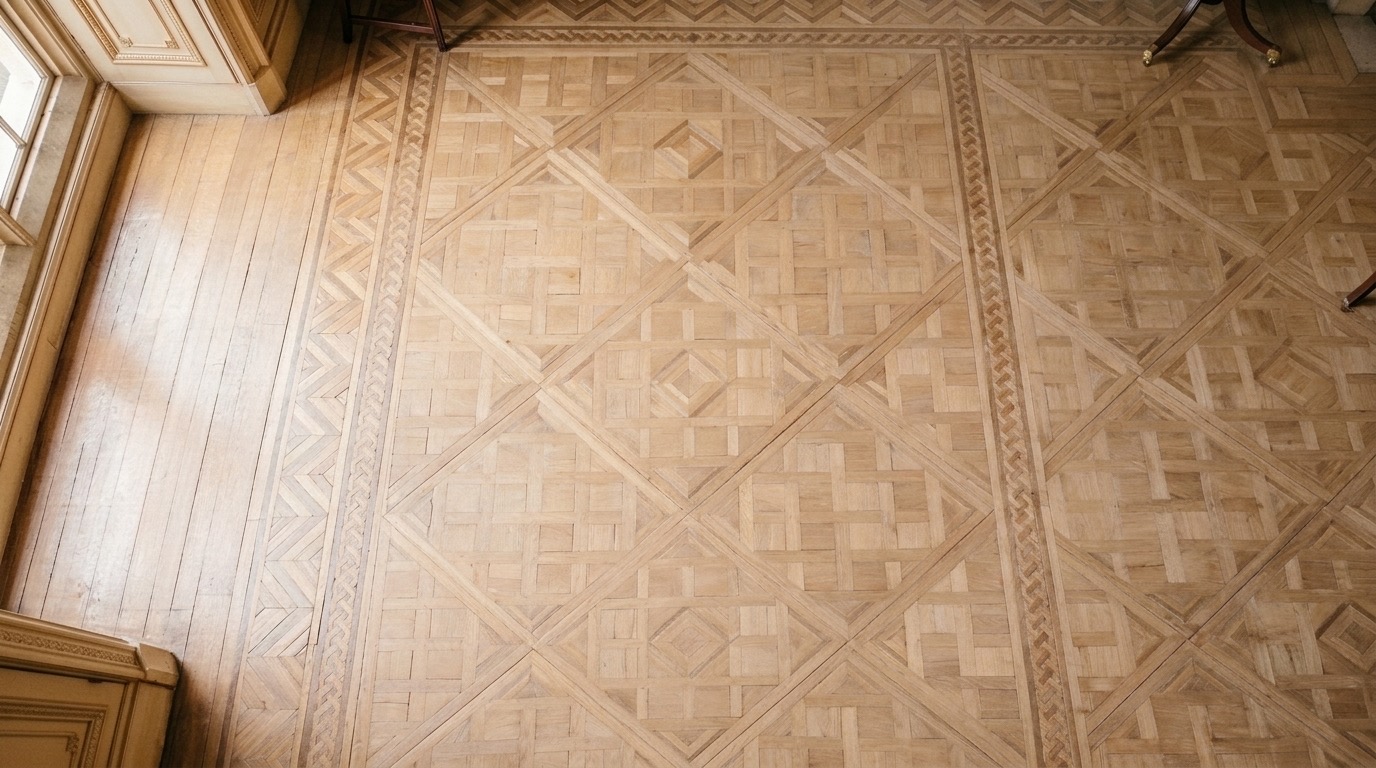
Pattern work sanded with the grain direction of every piece. Patterned floors do not forgive a heavy hand.
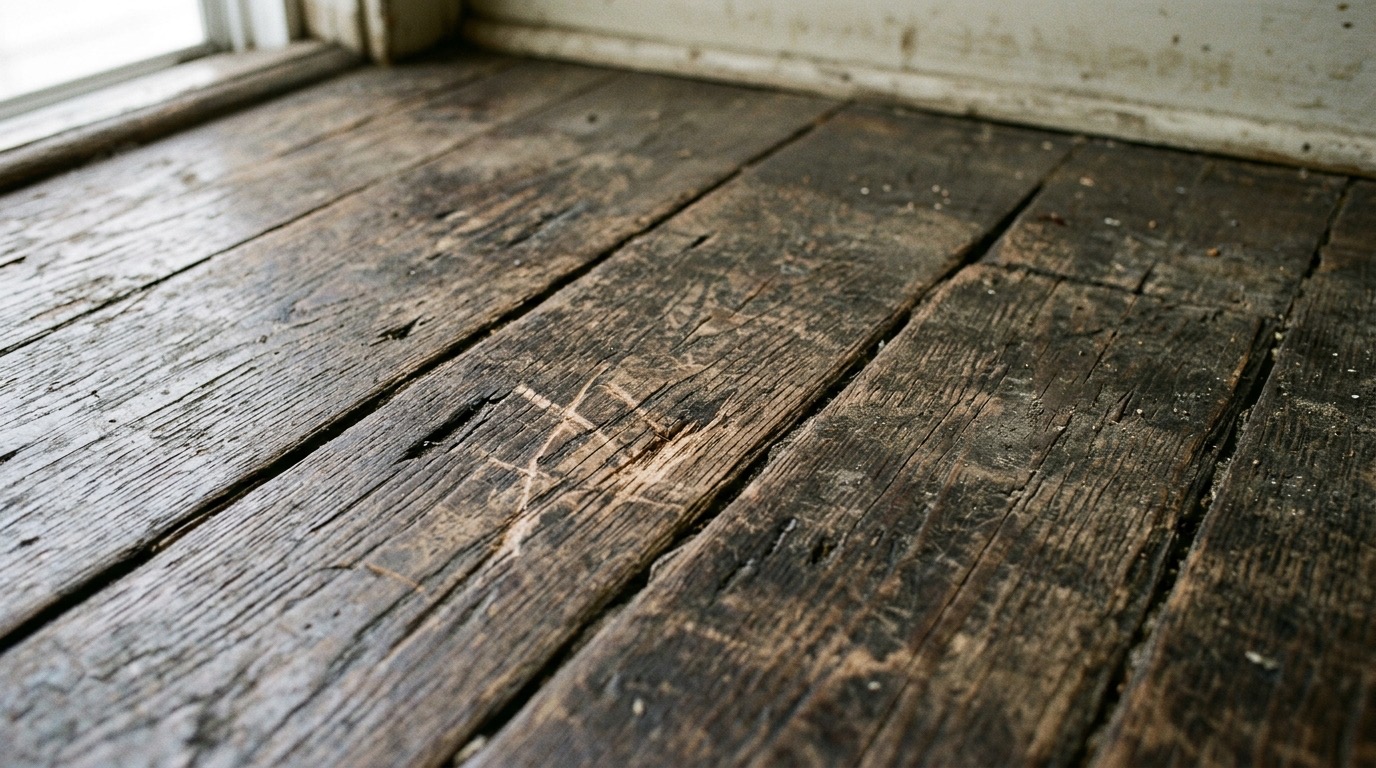
( 005 )
Damaged boards replaced and blended into the run, then the whole surface finished as one piece.
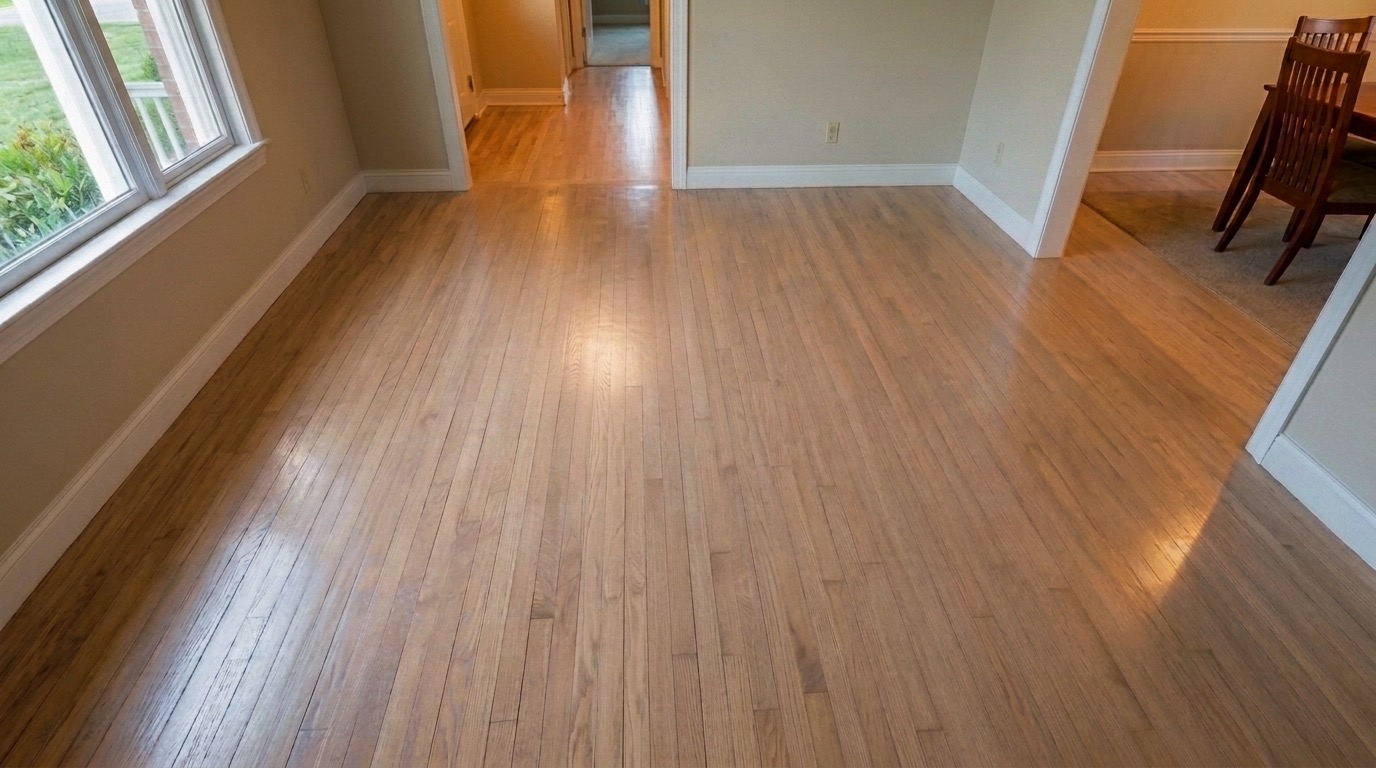
( 006 )
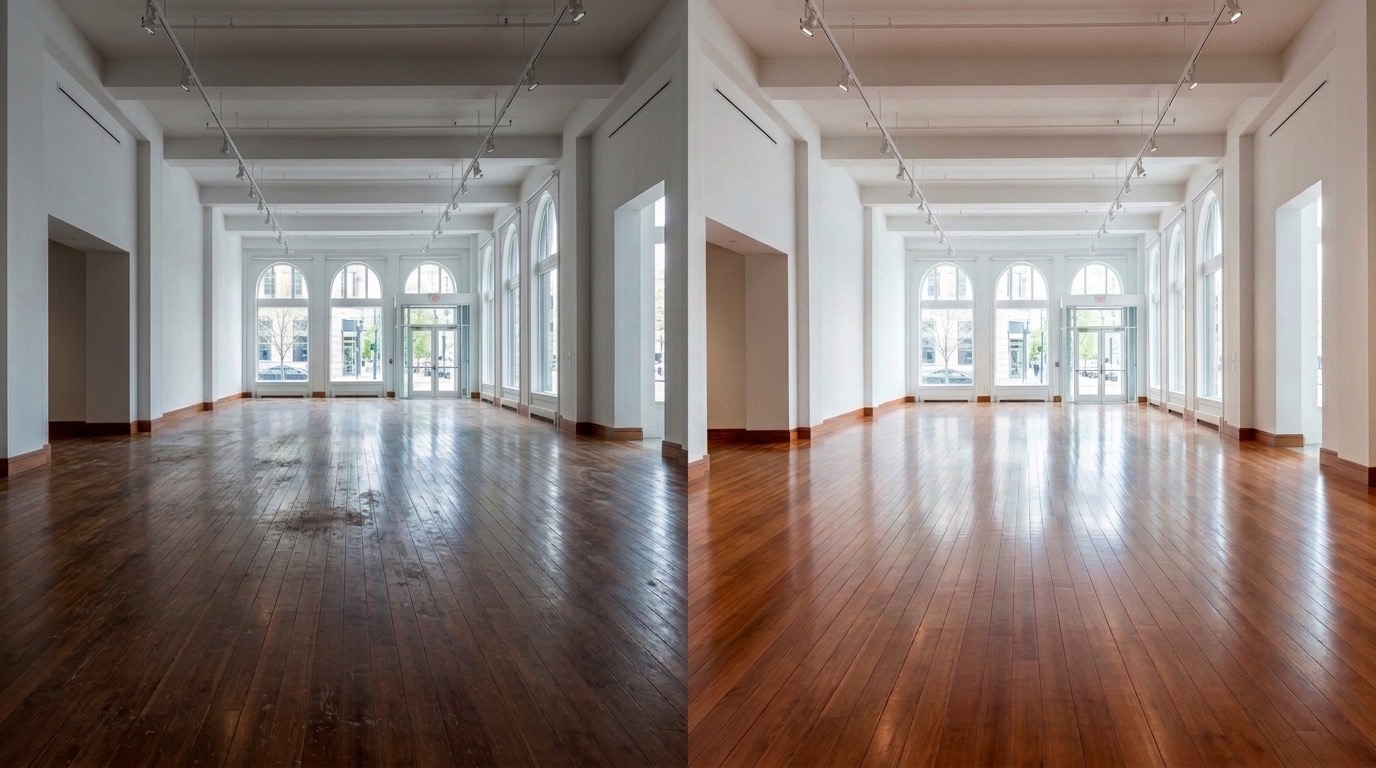
Finish worn but the wood sound. Surface abraded and recoated — the least invasive service we offer.
The wood under most GTA floors is better quality than anything you'd put down new. Refinishing costs a fraction of replacement — no demolition, no disposal, no subfloor surprises.
02 — Which one is your floor
The two-second test
Run a fingernail across the worst scratch you can find. If it catches, the damage is into the wood and the floor needs sanding. If it doesn't, you're looking at surface wear — and a recoat will cost you far less.
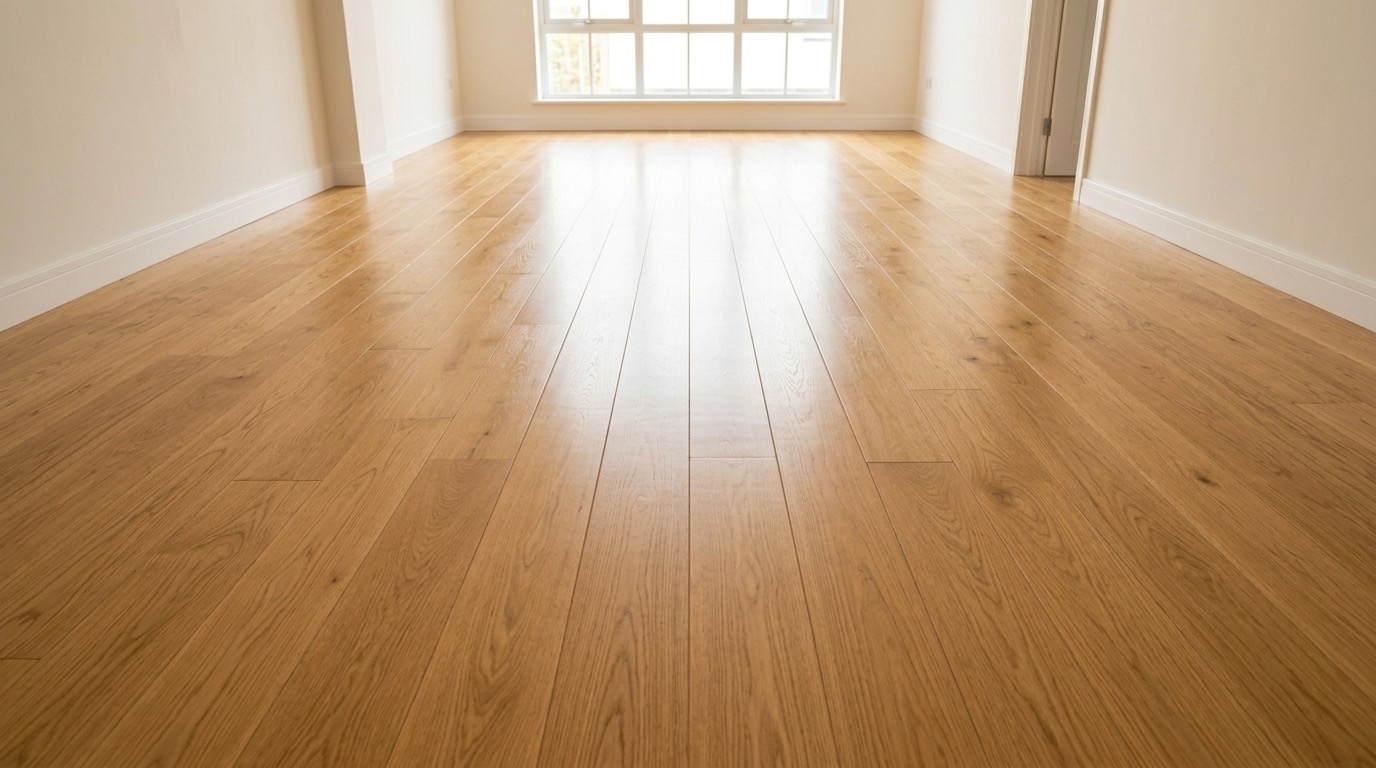
TIER ONE
Worn finish, healthy wood underneath. We refresh the surface and lay down a new coat — fastest and most affordable.
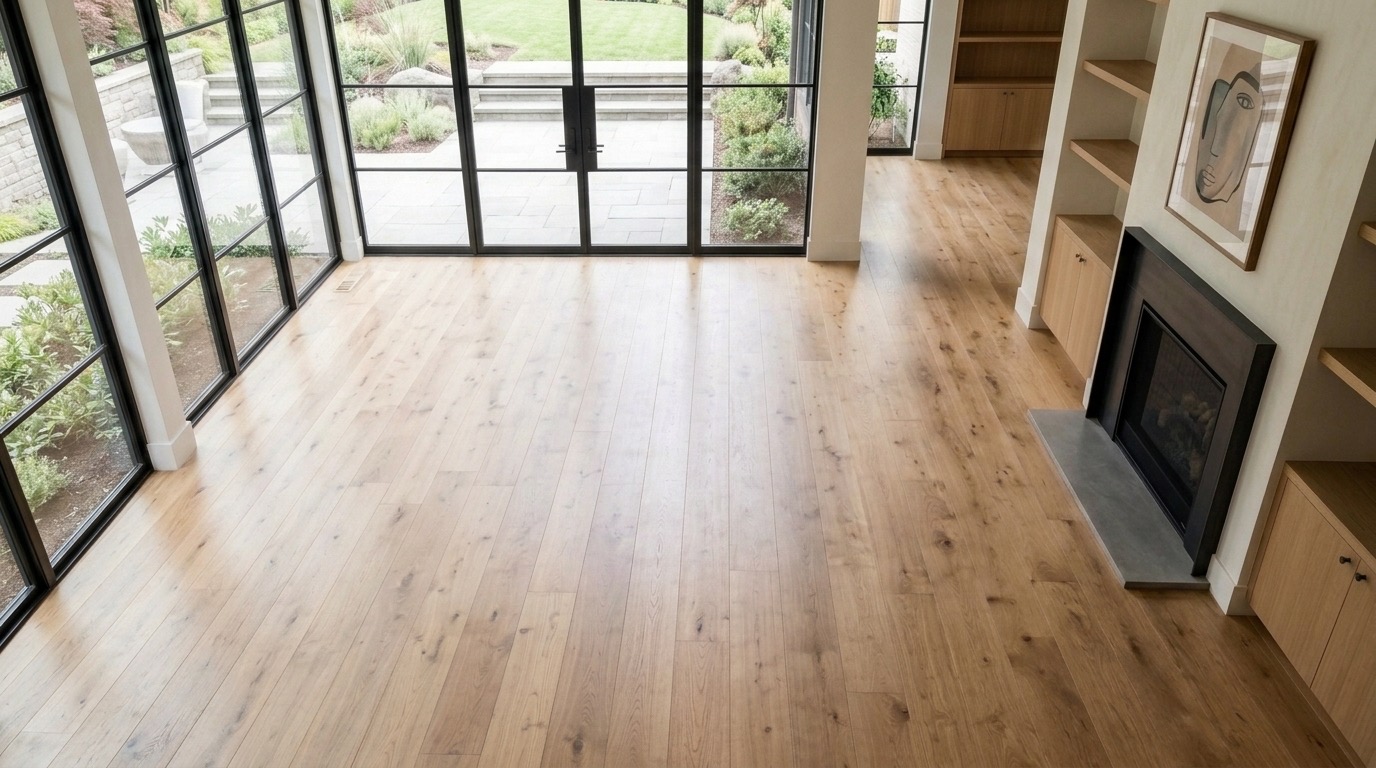
TIER TWO
Complete strip-down to bare wood. Scratches and years of wear sanded away, then new stain and finish in the colour you choose.
TIER THREE
Carpet removal, damaged boards, water staining, or gaps that need carpentry before any finish goes on.
Stairs are priced separately — hand work, one step at a time, and often solid oak hiding under old carpet.
03 — What the mess actually looks like
Sanding a floor makes dust. What matters is where it goes. We run a dust-containment system, seal off the rooms we aren't working in, protect the routes we walk, and clean the site at the end of every day.
Whether you can stay in the home depends on the job. We'll tell you straight at the assessment, in writing, before you commit to anything. We don't use the word dustless, because nobody honestly can.
04 — How it works
01
We come to you, look at the floor properly, and tell you honestly which tier it needs. Sometimes that answer is "not yet."
02
Scope, inclusions, exclusions, and whether you can stay in the home. Valid 30 days. Nothing added later.
03
Rooms sealed off, dust contained, site cleaned at the end of every day.
04
We walk the finished floor with you, and tell you when it's walkable versus fully cured.
05 — Under the carpet
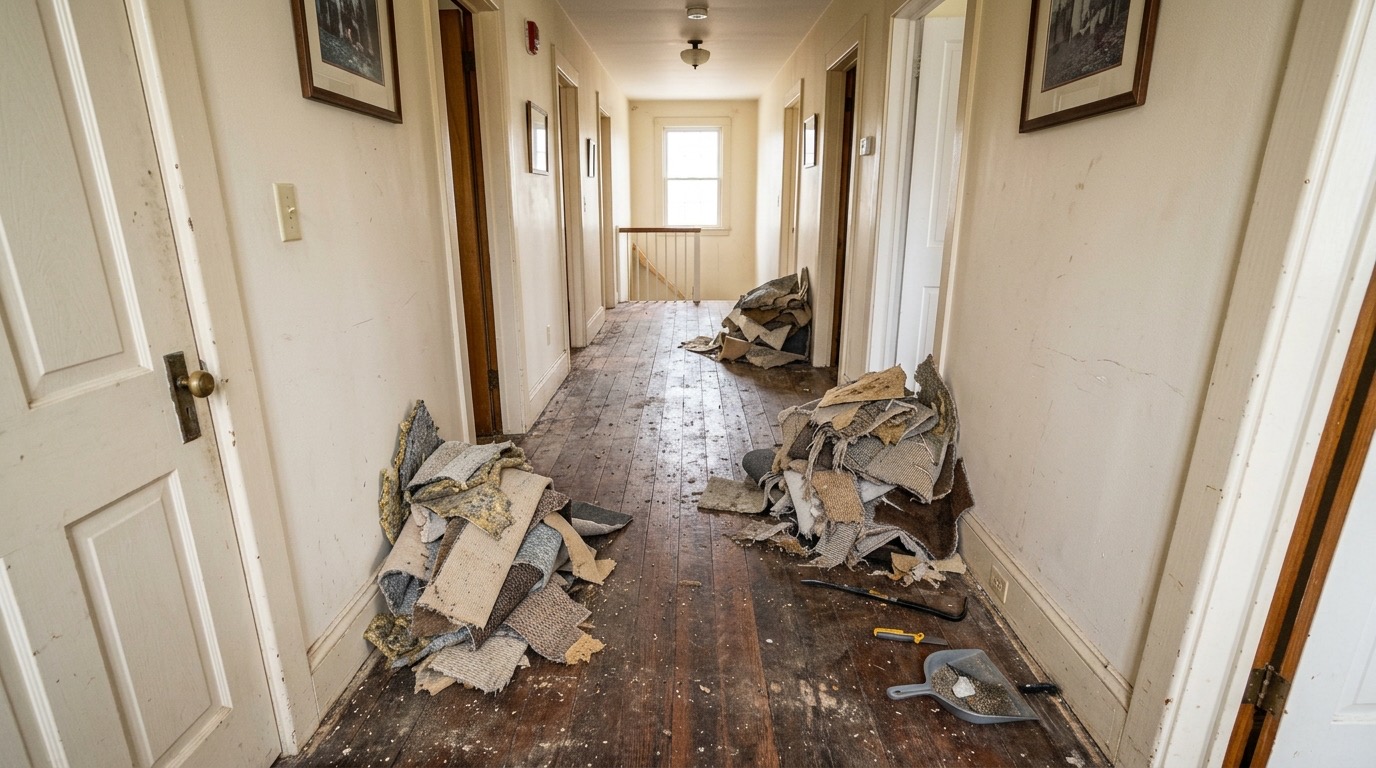
Pull up a corner in a closet and look. If you find wood, don't assume it's too far gone — staple holes, tack strip marks, and decades of grime all sand out.
We take the carpet out too: carpet, underlay, staples, and tack strip hauled away before the sanding starts.
Send us a photo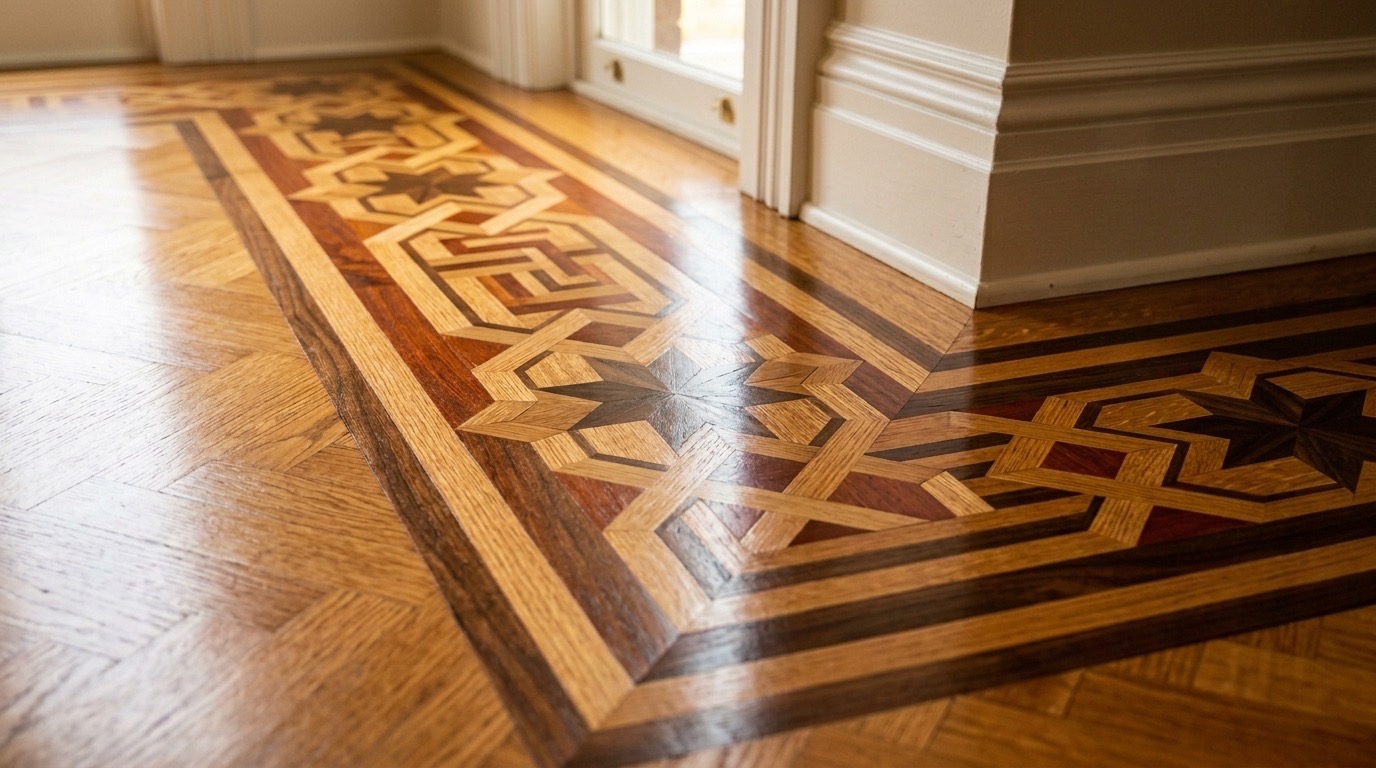
Floor sanding & refinishing
A light recoat or a full strip back to bare wood. We'll tell you which one before you spend anything.
The two-second test
Run a fingernail across the worst scratch you can find. If it catches, the damage is into the wood and the floor needs sanding. If it doesn't, a recoat will cost you far less.
TIER ONE
Not every dull floor needs to be sanded to bare wood. If the finish has gone scuffed and lifeless but the wood beneath it is sound, we lightly abrade the existing surface and apply a fresh protective coat. Done on a regular cycle, it can keep a floor from ever needing a full refinish.
Probably your floor if
It looks dull or cloudy in the light
Scuffs don't catch a fingernail
No grey staining, bare patches, or gaps
TIER TWO
The service most people picture. We take the floor back to bare wood, removing the old finish along with the scratches, pet marks, sun-faded patches, and dark traffic paths worked into it over the years. Then you choose the colour and sheen, and we build the finish back up.
Probably your floor if
Scratches catch your fingernail
There are worn-through patches of bare wood
The colour is uneven between sunlit and shaded areas
You want a different stain colour
What's included
In every floor job
Dust containment and rooms sealed off
Site protection and daily clean-up
Sanding, edging, and hand work in the corners
Stain and finish coats as quoted
Vents lifted and reset flush
A walkthrough before we call it done
Priced separately
Carpet, underlay, and tack strip removal
Furniture moving
Board replacement and repairs
Stairs
Custom stain colour match
Extra finish coat in high-traffic rooms
Baseboard and quarter-round removal
Questions we get
Most will. Black stains — usually pet damage or a leak — have gone through the board and sanding won't reach them. We point those out at the assessment and price replacing them, so nothing is a surprise at the end.
Depends on the job — the size, the layout, and where you'd be sleeping. We'll tell you straight at the assessment, in writing, before you commit to anything.
Solid hardwood usually has several sandings in it across its life. Engineered may have one, or none. We check the wear layer at a vent or threshold before quoting, and if there isn't enough wood left we'll say so rather than sell you a refinish.
Usually. We test on your own floor in a discreet spot and get your sign-off before doing the room, because stain reads differently on every species and every age of wood.
Walkable and fully cured are different days. We give you both dates at the quote, not on the last day, and rugs go down last.
Stair refinishing
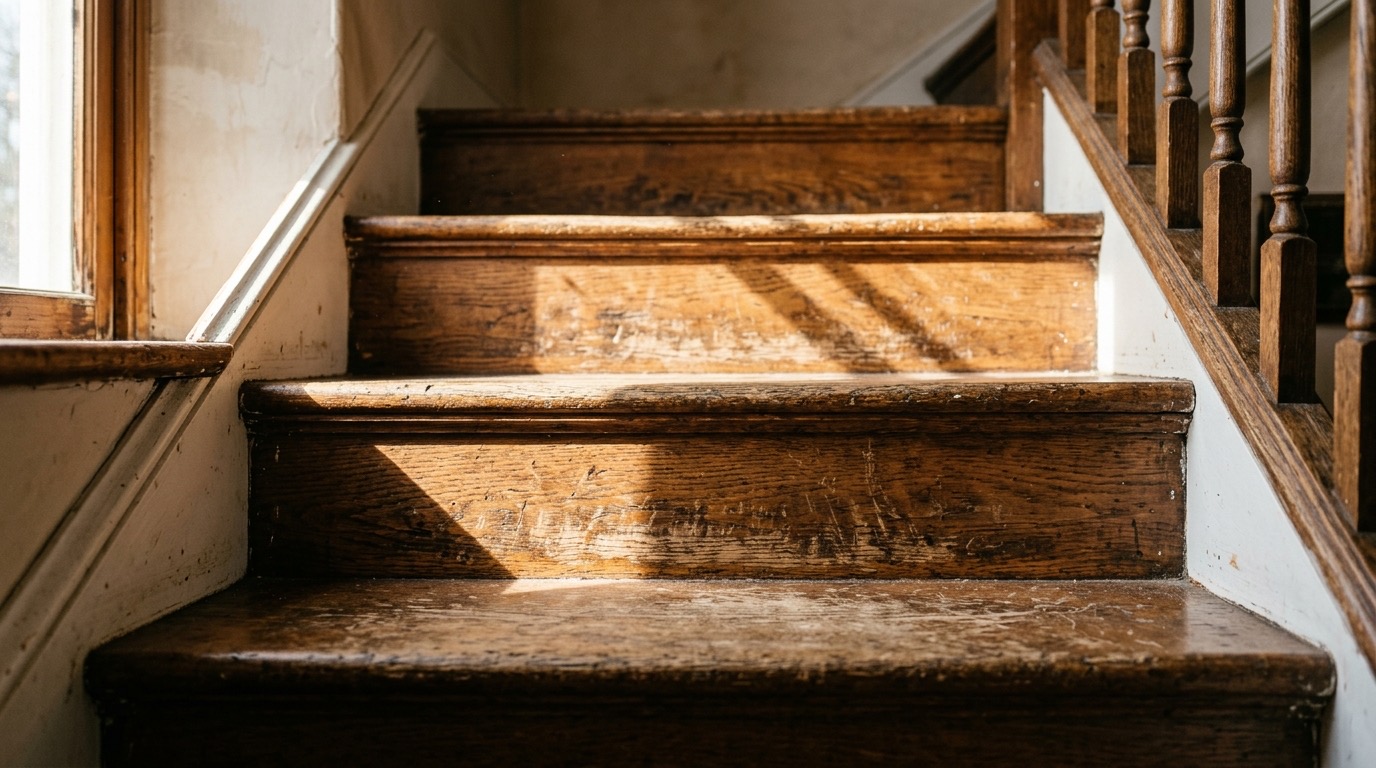
More wear than any floor in the house, and the first thing anyone walking in sees.
Why stairs are different
A floor machine can't touch a staircase. Every tread, nosing, and riser is sanded by hand, which is why stairs are priced per step rather than by the square foot — the labour has almost nothing to do with the area.
The nosing is the part that matters most. It's the edge you see from below, it takes the heaviest wear, and it's the first place a rushed job shows. We sand the profile rather than flattening it.
Winder and pie-shaped treads on a turn take longer than straight ones. We count them separately and say so in the quote.
What we do
Sanded back and stained to match your floor, or to a colour you choose. This is where the wear lives.
Painted clean, usually white — what makes a refinished staircase read as new rather than just sanded.
Stripped and refinished by the linear foot. We don't sell handrails alone — they go with stair or floor work.
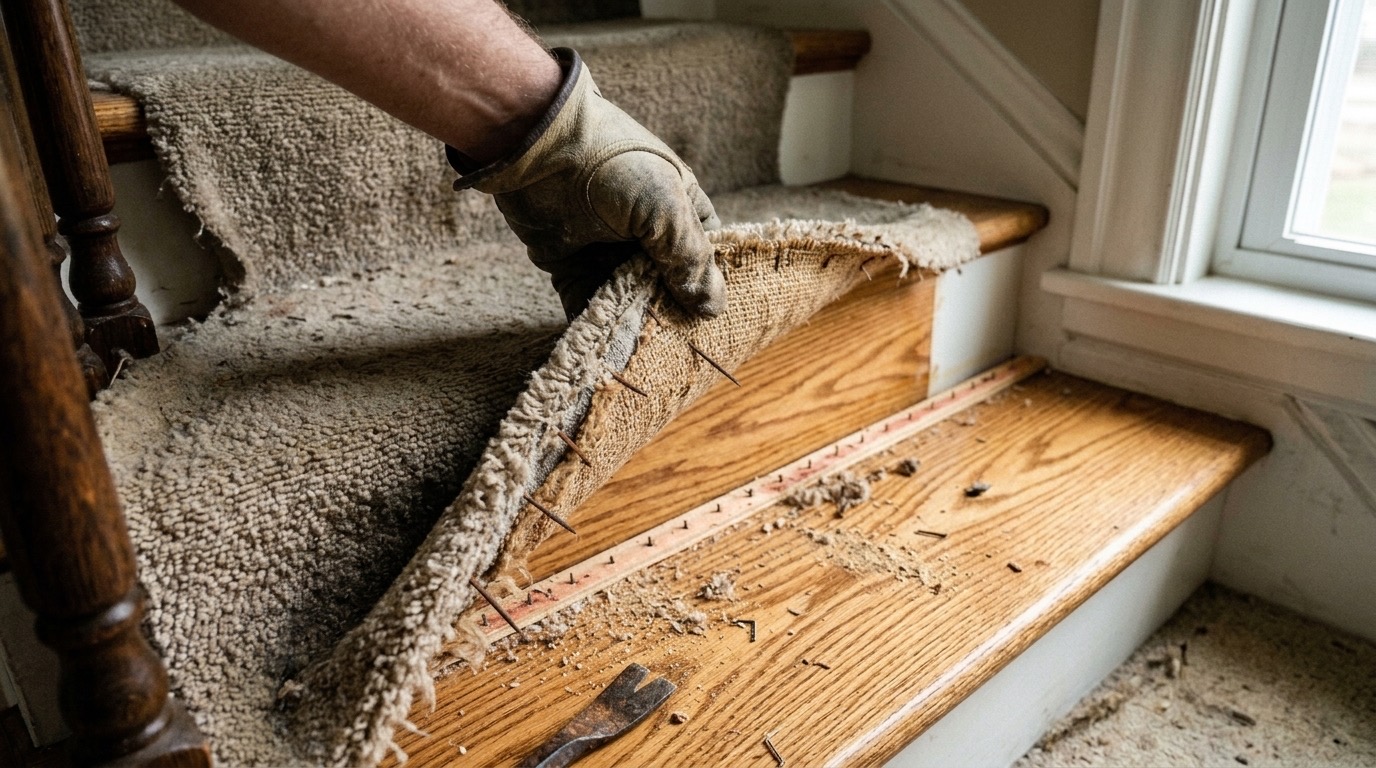
Carpet, underlay, staples, and tack strip off the stairs and hauled away. Priced per step.
Under the carpet
Builders carpeted a lot of GTA staircases over solid oak treads. Pull back a corner at the top step and look. If you find wood, don't assume it's ruined — staple holes and tack strip marks sand out.
What you do sometimes find is a construction-grade riser that was never meant to be seen, or a tread that's been notched. Both are fixable, and we'll tell you which you have before quoting.
Send a photo of your top stepQuestions we get
Usually, and we test on your own treads first. Stair treads are often a different species or age than the floor, so they take stain differently. We show you the test before committing.
Treads alone is a legitimate job if the risers are already sound and painted. What doesn't work is doing half a flight — there's no clean place to stop.
Sometimes, and it's worth doing while the carpet is off. Creaking is usually a loose tread or a failed wedge underneath. We'll look and tell you whether it's a quick fix or a carpentry job.
Yes. Stairs-only jobs are common, especially after a carpet removal. A minimum applies, since the setup and containment are the same as a bigger job.
Repair & restoration
Damaged boards, black staining, gaps, and floors written off as too far gone. We fix the wood first.
The difference
Some floors need work done to the wood before any finish goes on. A dishwasher leak that blackened the boards, a section lifted when carpet came up, planks that have shrunk apart, a gouge from moving a fridge.
We replace or repair the affected boards, blend them into the surrounding floor, then sand and finish the whole surface as one piece — so the repair isn't the first thing you see when you walk in.
Repairs are quoted as their own line on top of the refinishing, because the sanding still has to happen either way.
The repair work itself
Every repair is quoted as its own line, so you can see what you're paying for and what it's fixing.
Damaged, split, blackened, or missing boards lifted out and replaced with matching stock. We cut them in to the existing pattern rather than dropping a patch on top, then sand the whole floor as one surface so the new wood takes stain with everything around it.
Priced by area — the sanding still happens either way, so replacement is added to the refinishing rather than replacing it.
Boards shrink apart over decades of dry Ontario winters. Narrow gaps get filled with a compound mixed from your floor's own sanding dust, so the fill takes colour like the wood. Wide gaps don't fill well — those need a strip of board let in, and we'll tell you which yours are at the assessment.
Worth knowing — a floor that moves seasonally will reopen fine gaps. Filling is the right call for settled floors, not active ones.
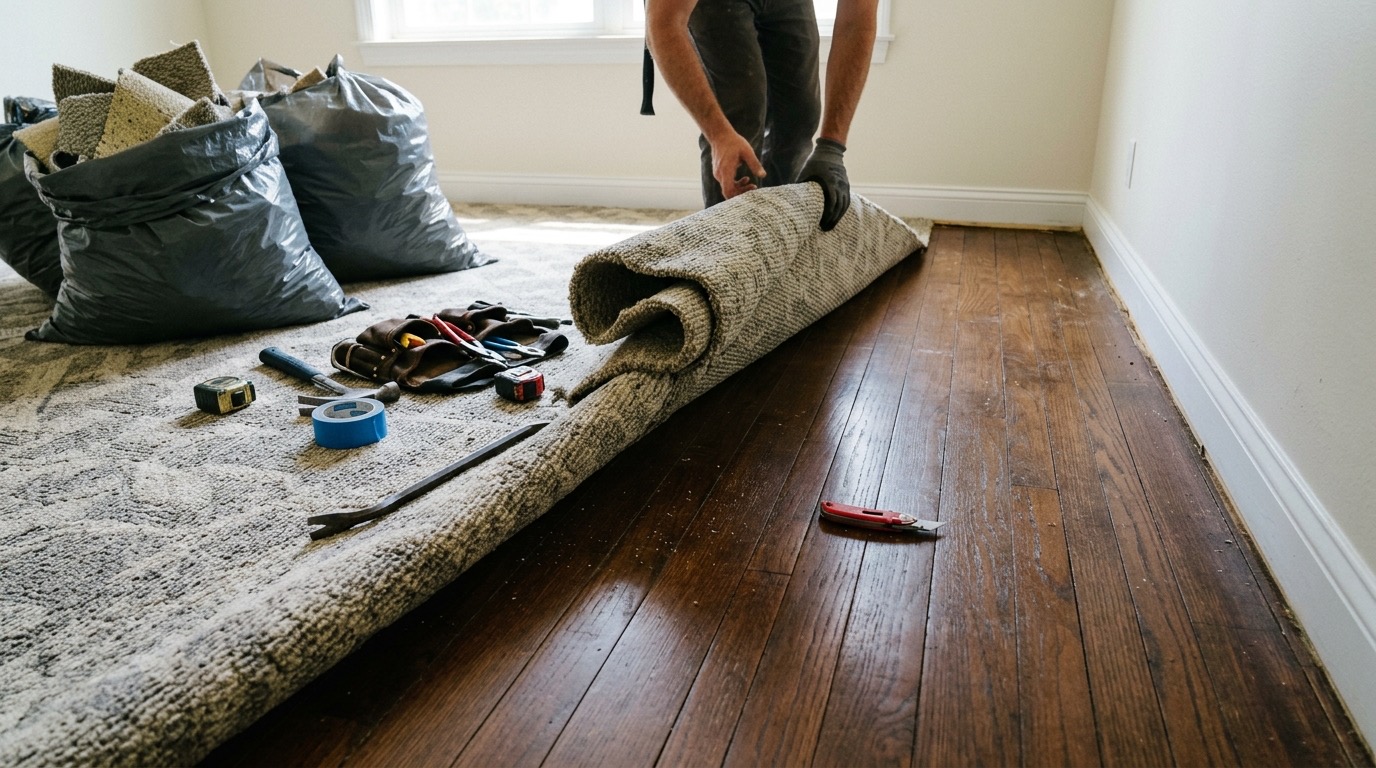
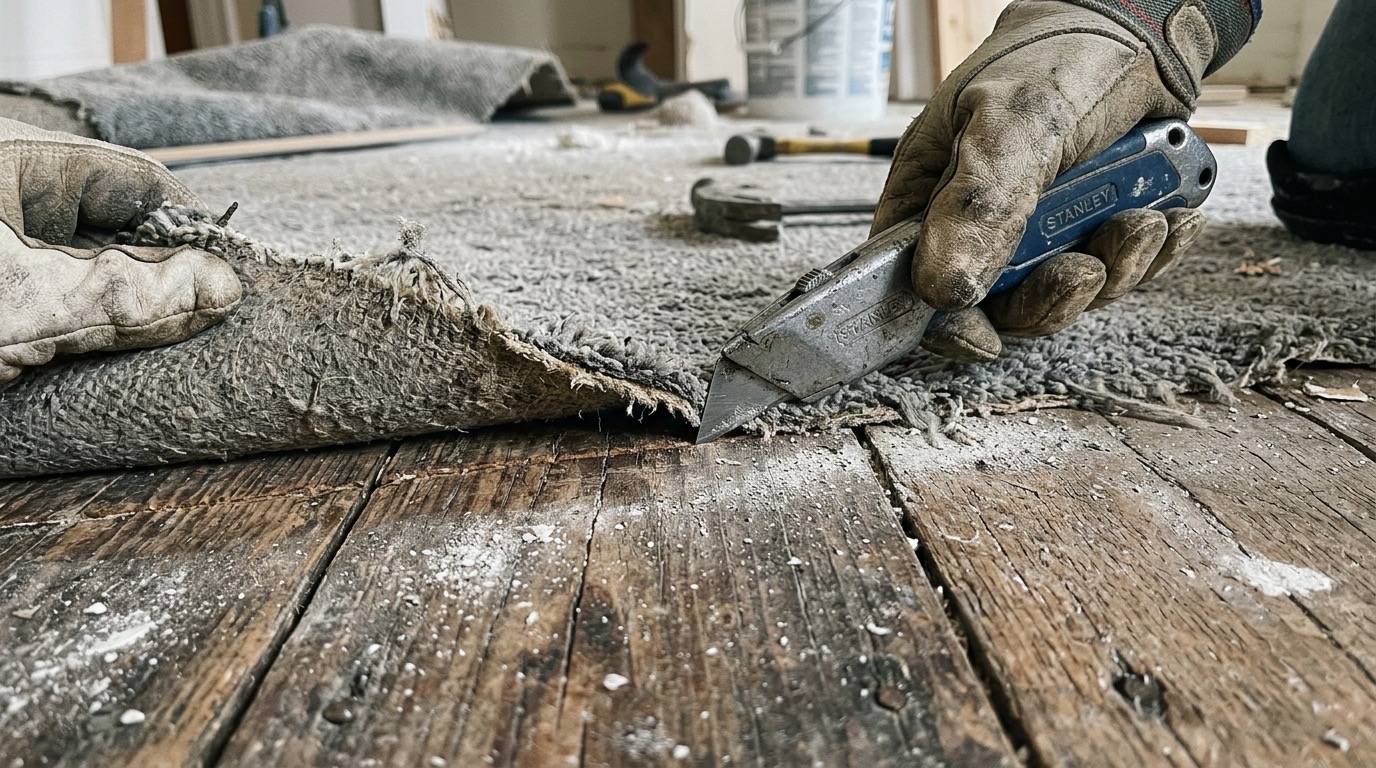
Carpet, underlay, staples, and tack strip lifted and hauled away before the sanding starts. You don't need to arrange disposal or find a bin. What's underneath usually looks far worse than it is — staple holes and tack strip marks around the perimeter sand out.
Priced per square foot for floors, per step on stairs.
Loose boards screwed back down from above and plugged, and broken-down thresholds rebuilt where hardwood meets tile or carpet. Both have to happen before the finish goes on.
Taken off so the finish runs clean to the wall instead of stopping short, then reset once the floor is done.
New boards are a different age than the wood around them and take colour differently. We test on your own offcuts until the repaired run matches, before anything goes on the floor.
What we repair
If any of these describe your floor, you're on the right page.
Grey or black marks around a sink, fridge, radiator, or door. The staining has gone through the board, so it comes out with the board — not with the sander.
Gouges, splits, a section lifted for plumbing, or planks broken during a renovation. Replaced and blended into the run.
Boards that have shrunk apart over decades of dry winters. Some gaps get filled, some need a board let in — depends on the width.
Movement underfoot usually means a fastening problem in the subfloor. Worth fixing while the floor is open, not after the finish is on.
Staple holes, tack strip marks, and adhesive residue. These almost always sand out — the floor looks far worse than it is.
Where hardwood meets tile, carpet, or a doorway and the edge has broken down. Reset so the run reads as continuous.
One thing we'll always tell you honestly
If your floor is cupping or crowning — boards curling at the edges or domed in the middle — there's a moisture source somewhere. Refinishing a moving floor is money spent twice, because the movement continues after we leave.
We'll find the cause before quoting, and if it needs addressing first, we'll say so rather than take the job.
Questions we get
Close, and closer after the whole floor is sanded and finished together — which is exactly why we don't do repairs without refinishing the surrounding area. New wood is younger than yours and takes stain slightly differently, so a repair left unsanded always shows.
Yes, if there's a doorway or threshold to stop at. What doesn't work is stopping mid-run in an open space — you'll see the line for as long as you own the house.
Water damage sometimes is. We document the affected area with photographs and give you an itemised written quote you can submit — that's usually what an adjuster asks for.
Not by sanding. The staining is a reaction deep in the wood fibre, not a surface mark. Your options are replacing those boards or accepting them, and we'll price both so you can choose.
Free floor assessment
We reply the same day, usually within the hour. The assessment is free, with no obligation to book anything.
Texting a photo of your worst room is the fastest way to get a straight answer — no visit needed for that part.
Call or text
(647) 575-1298Based in
Richmond Hill, Ontario — working across the GTA
1
We reply the same day, usually within the hour, to ask anything the form didn't cover.
2
You get a straight answer on which service your floor needs. Sometimes that answer is "not yet."
3
We book the free on-site assessment, and confirm whether you can stay in the home during the work.
4
A written quote follows the same day, in plain language. Valid 30 days.
Name and one way to reach you is all we truly need — the rest helps us come prepared.
Service area
If you're outside these and not too far past the edge, ask anyway — we'd rather tell you honestly than have you wonder.